

Living in Waynesboro, Virginia: A Local Guide for Homebuyers and Anyone Considering a Move
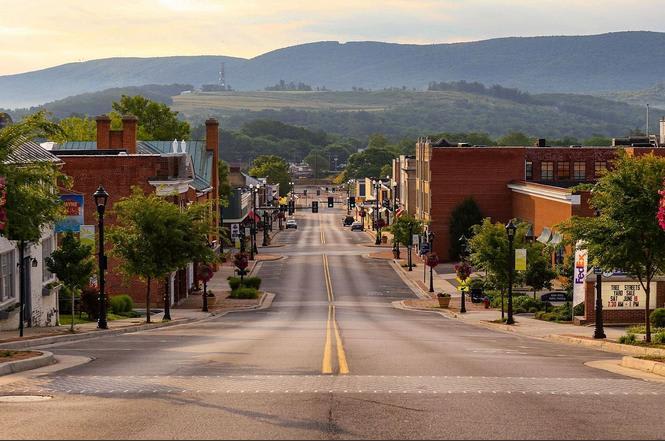
At the foot of the Blue Ridge, Waynesboro occupies one of the more interesting locations in the Shenandoah Valley.
Published October 1, 2026 · 9-minute read
Category: Living in the Shenandoah Valley | Relocation
Waynesboro can be easy to overlook.
People moving to this part of Virginia often arrive with one of the better-known destinations already in mind. Charlottesville has the University of Virginia and a national reputation. Staunton has its historic downtown and architecture. Harrisonburg has James Madison University and the energy of a larger college town.
Waynesboro is a little harder to summarize.
And that may be part of what makes it interesting.
The city sits at the eastern edge of the Shenandoah Valley, where the land begins climbing toward the Blue Ridge. Staunton is just to the west. Charlottesville is on the other side of the mountain. Interstate 64 connects the three, while the entrances to Skyline Drive and the Blue Ridge Parkway are just outside town.
The South River runs directly through the city.
Older neighborhoods sit beneath the mountains. Augusta County begins almost as soon as the city ends. Downtown is still evolving, while parks, trails and river access have become increasingly important parts of Waynesboro's identity.
For someone considering a move to Central Virginia, Waynesboro deserves more than a drive through on the way somewhere else.
In Plain English: Waynesboro's greatest strength may be its location. You can live in a small Shenandoah Valley city while remaining closely connected to Staunton, Augusta County, Charlottesville and the Blue Ridge.
Where Is Waynesboro?
Waynesboro sits in the southern portion of the Shenandoah Valley, approximately 12 miles east of Staunton and roughly 30 miles west of Charlottesville.
That geography matters.
Interstate 64 passes immediately south of the city before climbing over Afton Mountain toward Charlottesville. Interstate 81 is a short drive west near Staunton.
Head east and you're crossing the Blue Ridge.
Head west and you're quickly into the broader Shenandoah Valley.
Head south or north and you're surrounded by Augusta County.
This gives Waynesboro an unusual position for people whose lives don't fit neatly within one city.
Someone may work toward Charlottesville but prefer living west of the mountain.
Another household may have one person working in Staunton and another traveling east.
Others simply want easy access to the mountains without living far from everyday services.
Where Waynesboro sits on the map is an important part of understanding why people choose to live here.
A City Shaped by the River and the Mountains
Waynesboro doesn't merely have mountain views.
The Blue Ridge feels physically close.
Drive east through town and the mountains rise directly in front of you. Continue toward Afton and you're soon climbing toward Rockfish Gap, where Shenandoah National Park's Skyline Drive meets the northern end of the Blue Ridge Parkway.
That relationship with the mountains is one of the city's defining characteristics.
The other is the South River.
The river passes directly through Waynesboro and downtown, something relatively unusual for a small Virginia city. Rather than treating the river simply as geography, the city has increasingly connected it with parks, recreation and trails.
The South River Greenway now follows the river through downtown and connects several parts of the city. Waynesboro's current parks information describes a two-mile greenway, while the city's broader greenway program continues working toward additional connections. Waynesboro VA
For someone who likes being able to walk, ride a bicycle or get near the water without driving out of town, that's a meaningful everyday amenity.
Downtown Waynesboro
Downtown Waynesboro is different from downtown Staunton.
That's worth saying at the outset.
Staunton has one of Virginia's more intact and visually distinctive historic downtowns. Waynesboro's downtown has been shaped more heavily by industry, transportation and redevelopment over the years.
But that doesn't make it uninteresting.
The South River runs beside downtown. Constitution Park and the greenway create public space along the water. Restaurants, breweries, shops, arts organizations and older commercial buildings are mixed with properties that still have room for reinvestment.
I actually think that last part is important.
Waynesboro doesn't feel finished.
There are places where you can see what the city was, what it is now and what it could become almost simultaneously.
For some people, that evolving quality is part of the appeal.
Why Waynesboro Sometimes Gets Overlooked
Waynesboro doesn't have one simple identity that outsiders immediately recognize.
Staunton has historic architecture.
Harrisonburg has JMU.
Charlottesville has UVA.
Waynesboro historically had a strong industrial identity, and industry remains part of the local economy and history. But today's Waynesboro is increasingly also associated with outdoor recreation, the South River, parks, trails, arts and its position at the gateway to the Blue Ridge.
That transition isn't necessarily complete.
And I don't think that's a negative.
Sometimes the most interesting communities are the ones still figuring out what their next chapter looks like.
The Tree Streets
If you're interested in older houses, the Tree Streets should be on your list of places to explore.
The neighborhood sits just south of downtown and gets its name quite literally from streets including Maple, Walnut and Chestnut.
Its development began during Virginia's development boom of the late 1800s, and the neighborhood contains an interesting mixture of architecture. The Virginia Department of Historic Resources identifies Queen Anne, Classical Revival, Tudor Revival, Arts and Crafts, Colonial Revival, American Foursquare and bungalow-style homes within the district. The Tree Streets were listed on the Virginia Landmarks Register in 2001 and the National Register of Historic Places in 2002. DHR
That variety is part of what makes the neighborhood interesting.
You can walk several blocks and encounter substantial historic houses, modest cottages, bungalows, porches, mature trees and homes built during different periods of Waynesboro's growth.
For buyers who like older neighborhoods but don't necessarily want the same experience as downtown Staunton, the Tree Streets offer something distinctly Waynesboro.
Housing in Waynesboro Is More Varied Than People Expect
The Tree Streets are only one piece of the market.
Waynesboro contains housing from many different periods.
You'll find:
Late-19th- and early-20th-century houses
Bungalows and cottages
Mid-century neighborhoods
Brick ranch homes
Split-levels
Townhouses
Condominiums
Newer subdivisions
Homes on larger lots toward the edges of the city
Then, almost immediately outside the city, Augusta County changes the equation again.
A buyer can move from a conventional city neighborhood to acreage, mountain views, newer subdivisions or rural property surprisingly quickly.
That is why I wouldn't evaluate Waynesboro real estate by looking only at houses technically inside the city limits.
Waynesboro and eastern Augusta County function together in many practical ways.
Walkability Depends Heavily on the Address
Waynesboro is not uniformly walkable.
Neither are Staunton or Harrisonburg.
But there are pockets where walking and cycling can become a meaningful part of daily life.
The downtown area, Tree Streets, South River Greenway and neighborhoods around the parks offer some of the better opportunities.
The greenway is especially important because it creates a recreational connection independent of the street network. The current city route follows relatively flat terrain along the South River and includes connections to downtown parks and neighborhoods. Waynesboro VA
The city is continuing to expand that network. Waynesboro reports that the Port Republic-to-North Park phase was completed in 2022 and the Loth Springs/Ridgeview Park connector was completed in 2025. Planning continues for additional connections, including toward Basic Park. Waynesboro VA
Outside these areas, a car becomes considerably more important.
So, as with most smaller Virginia cities:
Don't ask whether Waynesboro is walkable. Ask whether the particular address is walkable to the things you care about.
Parks Are One of Waynesboro's Strengths
Waynesboro has a surprisingly substantial park system for a city its size.
The city's current park system includes seven parks along with the South River Greenway, a four-mile water trail, sports facilities, playgrounds and other recreational amenities. Waynesboro VA
Ridgeview Park is particularly notable.
But what I like about Waynesboro's park system is that it isn't completely separated from the city.
The river, downtown, greenway and parks increasingly connect with one another.
That makes recreation feel less like something you have to drive somewhere to do.
The South River Is a Real Lifestyle Asset
The South River deserves its own section because it is more than scenery.
People fish it.
Walk beside it.
Ride bicycles along it.
Paddle sections of it.
Sit beside it.
The city has developed a four-mile water trail in addition to its greenway system. Waynesboro VA
Those things are difficult to capture in a conventional real estate search.
A listing might tell you a house has three bedrooms and two bathrooms.
It probably won't tell you that you can leave the house, walk down to the river and spend an hour outside without ever getting into a car.
Those are what I think of as lifestyle assets.
They're difficult to assign a precise dollar value to, but they can have an enormous effect on how someone experiences where they live.
If You Like the Outdoors, Waynesboro Makes a Strong Case
This is probably Waynesboro's easiest argument.
Rockfish Gap is just outside the city.
From there you have access to Shenandoah National Park and Skyline Drive in one direction and the Blue Ridge Parkway in the other.
The Blue Ridge Tunnel Trail is nearby.
George Washington National Forest isn't far away.
The Appalachian Trail crosses the mountains at Rockfish Gap.
And because Waynesboro sits immediately against the Blue Ridge, getting to these places doesn't necessarily require turning the outing into an all-day expedition.
That matters if outdoor recreation is part of your regular life rather than something you do twice a year.
Waynesboro vs. Staunton
Because the two cities are so close together, buyers frequently consider both.
They're only about 12 miles apart, but they don't feel the same.
Staunton has the stronger historic downtown identity, more dramatic urban topography and a particularly strong collection of historic architecture.
Waynesboro feels somewhat more spread out, flatter in many areas and more immediately connected to the Blue Ridge and South River.
Staunton tends to feel like a historic small city surrounded by the Valley.
Waynesboro feels more like a Valley city sitting directly at the foot of the mountains.
Neither description makes one better.
It simply changes the experience.
If you're relocating here, I would spend time in both before deciding.
What About Charlottesville?
This is where Waynesboro becomes particularly interesting.
Charlottesville is close enough that people living in Waynesboro may regularly travel east for work, healthcare, restaurants, shopping, UVA-related activities or entertainment.
But Afton Mountain sits between them.
That deserves consideration.
A drive that looks straightforward on a map can be affected by weather, fog, traffic and incidents on Interstate 64.
So I wouldn't describe Waynesboro as simply a Charlottesville suburb.
It isn't.
But for someone who wants access to Charlottesville while preferring to live in the Shenandoah Valley, Waynesboro occupies a geographic position that few other communities can replicate.
Augusta County Changes the Equation
As with Harrisonburg and Rockingham County, the city limits tell only part of the story.
Drive a few minutes outside Waynesboro and the landscape changes quickly.
Eastern Augusta County can offer:
Larger lots
Acreage
Mountain views
Rural homes
Newer subdivisions
Small farms
Building lots
Properties with workshops and outbuildings
That gives buyers an unusually broad range of choices within a relatively small geographic area.
You might live in the Tree Streets and walk toward downtown.
Or you might live ten minutes away on several acres looking toward the Blue Ridge.
Those are completely different lifestyles with the same Waynesboro mailing-area connection.
Waynesboro Is More Car-Dependent Than It First Appears
This is worth mentioning because relocation guides sometimes make every small city sound like a walkable village.
Waynesboro isn't.
Some neighborhoods offer good access to parks, downtown or the greenway.
Much of everyday life still requires a car.
Shopping areas, employment centers and residential neighborhoods are spread across the city and beyond.
If being able to walk to coffee, restaurants or work is important to you, look carefully at the individual neighborhood rather than assuming proximity based on the Waynesboro address.
The difference between living six blocks from downtown and several miles away can completely change your experience of the city.
What Does Waynesboro Feel Like?
This is harder to quantify.
And probably more useful.
Waynesboro feels less polished than some nearby communities.
I don't mean that negatively.
There are beautiful historic streets and mountain views alongside industrial buildings, older commercial corridors, renovated properties and places waiting for their next use.
The city feels practical.
It has history without feeling like a museum.
It has outdoor recreation without feeling like a resort town.
It has access to Charlottesville without feeling like Charlottesville.
And it has the Blue Ridge sitting at the end of the street reminding you exactly where you are.
That's a fairly unusual combination.
Who Should Take a Closer Look at Waynesboro?
I think Waynesboro deserves particular consideration if you:
Value quick access to the mountains.
Want to explore both city neighborhoods and nearby acreage.
Regularly travel toward Charlottesville but prefer the Shenandoah Valley.
Like older homes but don't necessarily need Staunton's historic-district atmosphere.
Want parks, trails and river access nearby.
Or simply want to live somewhere that still feels like it has room to evolve.
That doesn't mean Waynesboro will be right for everyone.
It means it deserves to be evaluated on its own terms.
How I Would Explore Waynesboro Before Moving Here
Don't just drive down Broad Street and decide you've seen Waynesboro.
Start downtown.
Walk part of the South River Greenway.
Drive through the Tree Streets.
Visit Ridgeview Park.
Follow Route 250 east toward Afton and look back toward the Valley.
Then drive outside the city into Augusta County.
If you're considering commuting east, drive across Afton Mountain at the time you'd normally commute.
Finally, come back in the evening.
That will tell you considerably more about living here than a list of statistics.
Key Point: When you're choosing where to live, the best research often happens outside the real estate listing.
Key Takeaways
Waynesboro occupies a distinctive position at the eastern edge of the Shenandoah Valley.
Its location provides convenient access to Staunton, Augusta County, Charlottesville and the Blue Ridge.
The South River, greenway and park system are meaningful recreational and lifestyle assets.
Housing ranges from historic homes in neighborhoods such as the Tree Streets to mid-century properties, newer subdivisions and rural properties just outside the city.
Waynesboro and Staunton are close geographically but offer noticeably different experiences.
And buyers considering Waynesboro should look beyond the city limits into eastern Augusta County as well.
Perhaps most importantly:
Waynesboro makes more sense once you spend some time there. Its appeal is less about one landmark or attraction and more about the combination of river, mountains, neighborhoods and location.
Common Questions
Is Waynesboro close to Charlottesville?
Yes. Waynesboro is roughly 30 miles west of Charlottesville via Interstate 64. Afton Mountain separates the two, so commuting conditions can vary with weather and traffic.
How far is Waynesboro from Staunton?
The two cities are approximately 12 miles apart and are connected primarily by Interstate 64 and Route 250.
Is Waynesboro in Augusta County?
No. Waynesboro is an independent Virginia city and is not legally part of Augusta County, although it is surrounded by the county and closely connected to it economically and geographically.
Is downtown Waynesboro walkable?
Parts of downtown and nearby neighborhoods are walkable, and the South River Greenway provides an important pedestrian and bicycle connection. Other parts of Waynesboro are much more car-dependent.
Does Waynesboro have historic homes?
Yes. The Tree Streets Historic District contains homes representing numerous architectural styles and periods and is listed on both the Virginia Landmarks Register and National Register of Historic Places. DHR
Is Waynesboro good for outdoor recreation?
Waynesboro provides unusually convenient access to the Blue Ridge, Shenandoah National Park, Skyline Drive, the Blue Ridge Parkway, Appalachian Trail, Blue Ridge Tunnel and numerous other recreational opportunities.
Should I consider Augusta County too?
Absolutely. Someone interested in Waynesboro may find very different property options immediately outside the city, including acreage, rural homes, newer subdivisions and mountain-view properties.
Official Resources
Virginia DHR: Tree Streets Historic District
About the Author
Isaac Hull is a REALTOR® serving Harrisonburg, Rockingham County, Staunton, Augusta County, Waynesboro, Charlottesville, Albemarle County, and communities throughout Central Virginia and the Shenandoah Valley.
With more than 10 years of experience as a licensed real estate professional, Isaac brings a well-rounded perspective shaped by a background in mortgage lending, residential and commercial real estate, land sales, construction, and small-scale development. He works with first-time homebuyers, growing families, investors, and clients buying or selling farms, estates, recreational land, and unique properties.
Isaac believes that informed clients make better decisions. Through this blog, he shares practical advice, local market insights, and straightforward explanations of the topics that matter most, from buying and selling a home to investment strategies, land ownership, market trends, and the unique characteristics of real estate across Central Virginia.
When he's not helping clients, you'll often find him exploring the Shenandoah Valley, enjoying the outdoors with his family, or discovering another corner of Virginia that reminds him why so many people choose to call this region home.
Continue Reading
Staunton vs. Harrisonburg: Which Shenandoah Valley City Is Right for You?
Buying an Older Home in Virginia: Charm, Character, and What Every Buyer Should Know
Buying Land in Virginia: 10 Things Every Buyer Should Know Before Making an Offer
How to Read a Real Estate Listing Like a Professional
Let's Talk Real Estate
Choosing where to live is about much more than finding the right house. The neighborhood, commute, recreation, surrounding countryside and way you actually spend your time all matter.
If you're considering Waynesboro, Staunton, Augusta County, Harrisonburg, Charlottesville or somewhere in between, I'm happy to help you understand the differences between the areas and the types of properties you'll find in each.
You don't have to be ready to buy or sell to reach out. Sometimes a quick conversation is all it takes to point you in the right direction.
Call or Text: (540) 435-0047
Email: hullisaac@gmail.com
Website: www.isaachullrealtor.com