
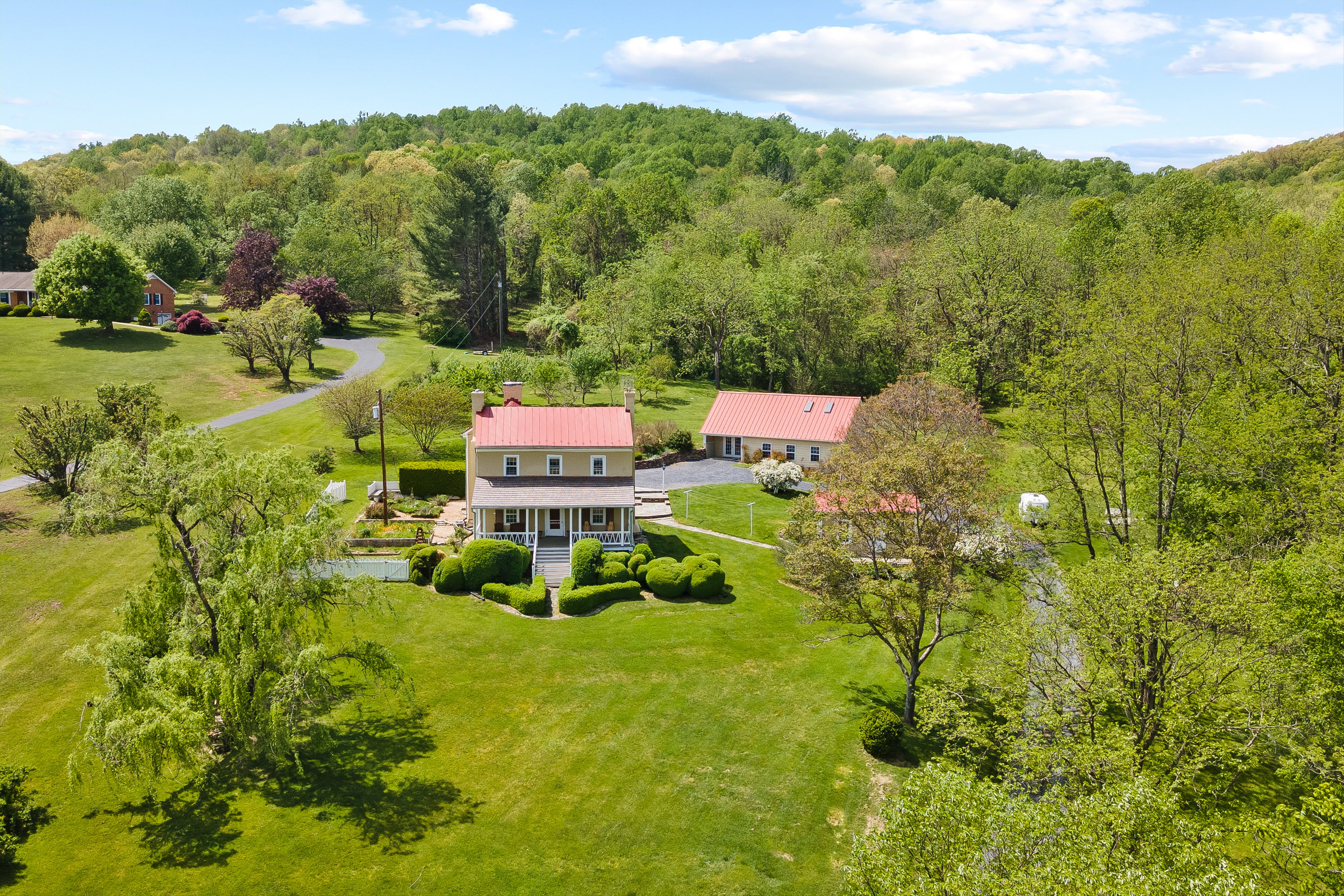

The House Isn't the Only Thing You're Buying: Understanding the Land Under It
When most people go to look at a house, they look at the house.
Makes sense.
They notice the kitchen, the floors, the size of the bedrooms, whether the basement smells funny, and whether their sofa will fit in the living room.
Meanwhile, some of the things that may matter most are sitting quietly outside.
The driveway. The drainage ditch. The neighboring field. The well. The septic system. That little gravel road you drove down to get there.
None of these things are particularly exciting during a showing. But they can become very exciting after closing if nobody bothered to ask the right questions.
This is especially true when buying property in the Shenandoah Valley and Central Virginia, where getting a little farther outside of town can quickly change the rules.
Start With the Property Lines
One of the simplest questions about a property can sometimes be surprisingly difficult to answer:
Where does the property actually end?
A fence isn't necessarily a property line. Neither is a tree line, driveway, creek or the place the previous owner has been mowing for the past 25 years.
Tax maps and online GIS systems are incredibly useful for getting a general understanding of a property, but they aren't surveys.
This becomes particularly important with rural properties, older homes and acreage. You may discover that a driveway crosses another parcel, a shed sits surprisingly close to a boundary, or part of the yard you've been admiring isn't actually part of the property.
Sometimes none of that creates a problem.
But you want to know what you're buying.
For buyers considering vacant land or a property where future development is part of the plan, I go into these issues in considerably more detail in Buying Land in Virginia: 10 Things Every Buyer Should Know Before Making an Offer.
That Beautiful Long Driveway Deserves a Few Questions
Long gravel driveways are charming.
They're slightly less charming when you discover that three other houses use yours.
Shared driveways and private roads are common throughout rural Virginia. There is nothing inherently wrong with either, but buyers should understand how they work.
Who owns the road?
Who maintains it?
Is there a recorded maintenance agreement?
Who plows the snow?
What happens when the road needs $15,000 worth of gravel and grading?
And perhaps most importantly, does your lender care?
A private road that has functioned perfectly well for generations can still raise questions during financing or title review. It's much easier to address those questions before closing than afterward.
Water Has to Go Somewhere
I pay a lot of attention to drainage when looking at property.
Water is patient.
Give it enough time and it will find the lowest spot, the crack in the foundation, the poorly graded corner of the basement or the culvert that hasn't been cleaned since the Reagan administration.
Look at how the land slopes around a house.
Where does rainwater go?
Are there swales or drainage easements?
Is the house downhill from neighboring properties?
Are there signs of standing water?
Is part of the property in a floodplain?
A beautiful creek can be a tremendous asset. It can also come with floodplain considerations, stream buffers and other restrictions that should be understood before buying.
The same applies to mountain properties. A dramatic slope may provide an incredible view, but it can also affect driveway access, construction possibilities, erosion and future development.
Drainage and moisture are also things I encourage buyers to pay particular attention to during the inspection process. I explain why in Home Inspections in Virginia: What Buyers Should Actually Be Looking For.
Wells: Where Does Your Water Come From?
Once you leave public water service, the answer may be a hole several hundred feet into the ground.
Private wells are common throughout Rockingham, Augusta, Page, Shenandoah, Albemarle and the surrounding counties.
A buyer should understand more than whether water comes out of the faucet.
How old is the well?
Where is it located?
How deep is it?
What is its yield?
Are there well records?
Has the water been tested?
Older properties sometimes have remarkably little documentation. That doesn't automatically mean there is a problem, but it may mean some additional investigation is worthwhile.
Water quality and quantity are also two different questions. A well can produce wonderful water but not enough of it, or plenty of water that needs treatment.
Septic Systems Deserve Even More Attention
If the property isn't connected to public sewer, there's a good chance everything leaving the house is going somewhere on the property.
You should probably know where.
A septic system typically includes a tank and a drainfield. Depending on the property, there may also be a designated area for a future replacement system.
Before purchasing, buyers should try to understand the type, age, location and condition of the system.
One particularly important question is what the septic system was designed to support.
A house may physically contain four bedrooms while the septic approval supports only three. That distinction can matter when buying, renovating or eventually selling the property.
Future plans matter too.
If you're thinking about adding a bedroom, guest cottage, pool, garage apartment or accessory dwelling unit, the existing septic system and available land may influence what is possible.
That enormous backyard isn't necessarily entirely available for your enormous future swimming pool.
Wells and septic systems deserve more attention than I can reasonably give them here, which is why I put together a separate guide: Well and Septic Systems in Virginia: What Every Rural Homebuyer Should Know.
Easements Aren't Necessarily Bad
The word easement occasionally makes buyers nervous.
It shouldn't automatically.
Easements are everywhere.
Utility companies may have easements. A neighbor may have the right to use part of a driveway. A property may have access across another parcel. Drainage infrastructure may cross the land.
What matters is understanding what the easement allows and where it is located.
An easement running quietly along the back property line may have practically no effect on how you use the property.
An easement directly through the area where you planned to build your dream garage might be more relevant.
Context matters.
Zoning Matters Even If You Aren't a Developer
Most buyers don't plan to subdivide their backyard into 14 building lots.
But zoning still matters.
Maybe you want chickens.
Or horses.
Or a detached apartment.
Or a workshop for your business.
Or a short-term rental.
Or eventually another house for a family member.
The fact that a property has enough physical space for something doesn't necessarily mean local regulations allow it.
This becomes especially important with acreage. Ten acres can sound like ten acres of possibilities, but zoning, setbacks, septic requirements, easements, floodplain, topography and access can substantially affect what can actually be done with the property.
If a particular use is important to you, verify it before buying.
Pay Attention to What's Next Door
Buyers naturally concentrate on the property they're purchasing.
I also like to look around it.
That peaceful field next door may remain a field for the next 50 years.
Or it might already be zoned for something completely different.
Public GIS systems, zoning maps and comprehensive plans can sometimes provide valuable clues about neighboring parcels and future development.
Nothing guarantees that the landscape around a property will remain unchanged forever.
That's especially worth remembering in growing areas around Harrisonburg, Rockingham County, Staunton, Augusta County, Waynesboro and Charlottesville.
Acreage Isn't All Created Equal
Five acres of gently rolling pasture and five acres running vertically up the side of a mountain are both five acres.
They don't necessarily have the same utility.
When evaluating land, consider:
Topography
Road frontage
Access
Soil
Drainage
Floodplain
Septic suitability
Utilities
Easements
Zoning
Existing improvements
This becomes even more important when purchasing farms, estates or larger tracts.
A 40-acre property might have 30 acres of productive pasture.
Another 40-acre property might have six usable acres and 34 acres of beautiful mountain.
Neither is necessarily better.
They're simply different properties for different buyers.
The House Still Matters Too
Looking carefully at the land doesn't mean ignoring the house.
Rural properties throughout the Shenandoah Valley often include older farmhouses, historic homes, additions completed at different times and outbuildings that may have been standing for generations.
Those properties deserve perspective.
An older house isn't automatically a problem house any more than a private well is automatically a problem. Age, construction, maintenance and previous improvements all need to be considered together.
If an older home is part of what you're looking for, I've written a separate guide on Buying an Older Home in Virginia: Charm, Character, and What Every Buyer Should Know.
The Goal Isn't to Find a Perfect Property
If you investigate property long enough, you will find something.
That's normal.
The purpose of due diligence isn't to produce a frightening list of everything that could theoretically go wrong. It's to understand what you're buying well enough to make a reasonable decision.
An easement isn't automatically a problem.
A private road isn't automatically a problem.
A well isn't automatically a problem.
A 75-year-old septic system, shared driveway with no agreement, questionable property line and creek running through the basement might warrant a little more conversation.
Every property has a story.
The important thing is understanding enough of that story before it becomes yours.
Buying Property in the Shenandoah Valley and Central Virginia
One of the things I enjoy most about real estate in this part of Virginia is the variety.
Within a relatively short drive, you can go from a downtown Staunton townhouse to a Rockingham County farm, a mountain property near Luray, an older home in Harrisonburg, acreage outside Waynesboro or an estate property in Albemarle County.
That variety is wonderful.
It also means there isn't a single checklist that works for every property.
Sometimes the house is the complicated part.
Sometimes it's the land underneath it.
Knowing which one you're dealing with before closing can save a lot of surprises later.
Common Questions About Buying Property With Land in Virginia
Is a county GIS map the same thing as a survey?
No. County GIS and tax maps can be very useful for understanding the general shape and location of a parcel, but buyers should not assume that the lines shown on an online map establish the precise legal boundaries of a property.
Should I have a well tested before buying a house?
When a property relies on a private well, buyers should consider appropriate water testing and investigate the well itself as part of their due diligence. What testing is appropriate can depend on the property, location, financing and circumstances of the transaction.
Should I have the septic system inspected?
A septic system can represent a significant component of a rural property. Understanding its location, condition, permitted capacity and available records can be an important part of evaluating the property.
Is a shared driveway a problem?
Not necessarily. Shared driveways and private roads are common in rural Virginia. The important questions are who owns the road or driveway, who has the right to use it, how maintenance is handled and whether adequate agreements are in place.
Can I build another house or an accessory dwelling on my acreage?
Maybe. Acreage alone doesn't determine what can be built. Zoning, subdivision regulations, setbacks, road access, septic suitability, easements and other local requirements can all affect future development.
What should I look for when buying a house with acreage?
Look beyond the number of acres. Consider boundaries, access, topography, drainage, water, septic, utilities, easements, zoning, neighboring land uses and how much of the property is actually suitable for the way you intend to use it.
About the Author
Isaac Hull is a REALTOR® serving Harrisonburg, Rockingham County, Staunton, Augusta County, Waynesboro, Charlottesville, Albemarle County, Page County, Luray, and communities throughout Central Virginia and the Shenandoah Valley.
With more than 10 years of experience as a licensed real estate professional, Isaac brings a well-rounded perspective shaped by a background in mortgage lending, residential and commercial real estate, land sales, construction, and small-scale development. He works with first-time homebuyers, growing families, investors, and clients buying or selling farms, estates, recreational land, and unique properties.
Isaac believes that informed clients make better decisions. Through this blog, he shares practical advice, local market insights, and straightforward explanations of the topics that matter most, from buying and selling a home to investment strategies, land ownership, market trends, and the unique characteristics of real estate across Central Virginia.
When he's not helping clients, you'll often find him exploring the Shenandoah Valley, enjoying the outdoors with his family, or discovering another corner of Virginia that reminds him why so many people choose to call this region home.
Continue Reading
Buying Land in Virginia: 10 Things Every Buyer Should Know Before Making an Offer
Well and Septic Systems in Virginia: What Every Rural Homebuyer Should Know
Home Inspections in Virginia: What Buyers Should Actually Be Looking For
Buying an Older Home in Virginia: Charm, Character, and What Every Buyer Should Know
Let's Talk Real Estate
Buying a property with land involves a few more questions than simply deciding whether you like the house.
If you're considering a home, farm, estate, acreage or recreational property in Harrisonburg, Rockingham County, Staunton, Augusta County, Waynesboro, Charlottesville, Albemarle County, Page County, Luray or elsewhere in Central Virginia and the Shenandoah Valley, I'm happy to help you understand the property and work through the due-diligence process.
You don't have to be ready to buy or sell to reach out. Sometimes a quick conversation is all it takes to point you in the right direction.
Call or Text: (540) 435-0047
Email: hullisaac@gmail.com
Website: IsaacHullRealtor.com