

What Really Determines a Home's Value? It's More Than Square Footage
What Really Determines a Home's Value? It's More Than Square Footage
If you ask ten people what determines a home's value, you'll probably hear the same answer: location, location, location.
It's not wrong—but it is incomplete.
Location certainly plays a major role, but it's only one ingredient in a much larger recipe. A home's value is influenced by dozens of factors that work together, some obvious and others surprisingly subtle. Size matters, but so do the land, the layout, the condition, the quality of construction, the neighborhood, the views, and even what's happening in the broader economy.
Understanding these factors is useful whether you're preparing to sell, buying your next home, or simply wondering what your property might be worth. It's also the reason two homes with similar square footage—even on the same street—can sell for dramatically different prices.
Let's take a closer look at what really drives a home's value.
Location Still Matters—But It's More Than an Address
We've all heard the old saying, but what makes one location more desirable than another?
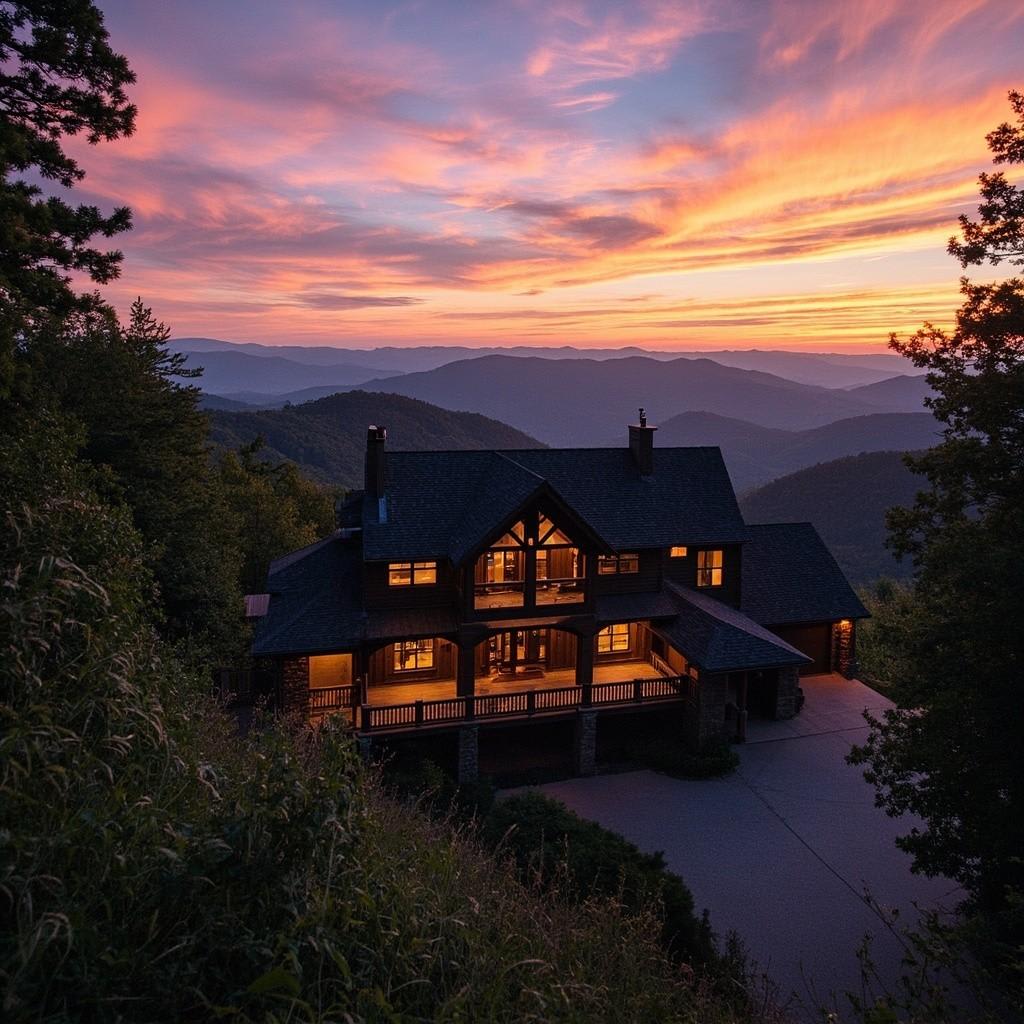
Sometimes it's obvious. A home overlooking the Blue Ridge Mountains or within walking distance of downtown Staunton offers a lifestyle that many buyers are willing to pay for.
Other times, the differences are much more subtle.
Two homes may share the same ZIP code, but one backs up to a busy road while the other overlooks a quiet pasture. One sits at the end of a peaceful cul-de-sac, while another experiences steady commuter traffic every morning.
In Harrisonburg, proximity to parks, schools, or downtown amenities can influence buyer demand. Around Charlottesville, vineyard views, established neighborhoods, and access to outdoor recreation often play a significant role. Throughout Augusta County and the Shenandoah Valley, privacy and scenic surroundings frequently become part of a property's appeal.
The bottom line: Location isn't just about where a home sits on a map—it's about how people experience living there.
The Land Is Often More Valuable Than People Realize
When buyers begin shopping, most of their attention goes to the house itself.
Experienced real estate professionals often spend just as much time evaluating the land.
A beautiful home on a difficult lot may not command the same value as a simpler home on exceptional land.
Factors that influence land value include:
- Privacy
- Mountain views
- Mature trees
- Usable acreage
- Topography
- Creek frontage
- Future development potential
- Road frontage
- Southern exposure
This becomes especially important throughout Central Virginia, where farms, estates, and rural properties often derive much of their value from the land itself rather than the structure sitting on it.
Five acres are not always worth more than two acres. Sometimes the smaller parcel is flatter, more usable, easier to maintain, or enjoys significantly better views.
Size Matters...But Only to a Point
Square footage is important because it gives buyers a way to compare homes.
But it shouldn't be confused with value.
A thoughtfully designed 2,000-square-foot home can feel larger, function better, and ultimately be worth more than a poorly designed 2,500-square-foot home.
Think about what buyers actually experience:
- Natural light
- Ceiling height
- Room proportions
- Storage
- Flow between rooms
- Functional living spaces
These characteristics often matter just as much as the number on the listing sheet.
Related Reading: Does Square Footage Really Matter? Yes... But Probably Not the Way You Think.
Condition Speaks Before a Buyer Says a Word
One of the first questions buyers ask themselves—often without realizing it—is:
"How much work will this house need?"
A well-maintained home inspires confidence.
Fresh paint is nice, but buyers also pay attention to things they can't always see in photographs:
- Roof age
- HVAC systems
- Electrical updates
- Plumbing
- Foundation condition
- Windows and insulation
Deferred maintenance creates uncertainty, and uncertainty almost always affects value.
Quality of Construction Leaves a Lasting Impression
Not all homes are built the same.
Some older homes throughout Staunton and Charlottesville feature old-growth lumber, detailed trim work, solid plaster walls, and craftsmanship that's difficult to replicate today.
Newer homes often offer:
- Better energy efficiency
- Modern floor plans
- Updated mechanical systems
- Lower maintenance
Neither is automatically better.
Quality of construction matters far more than the year a home was built.
Scarcity Creates Value
Some properties simply can't be duplicated.
That uniqueness often makes them more valuable.
Examples include:
- Historic homes
- Mountain-view properties
- Walkable downtown neighborhoods
- Farms with productive land
- Waterfront homes
- Properties with exceptional privacy
When buyers have fewer alternatives, demand tends to increase.
Market Conditions Matter More Than You Think
Even the perfect home doesn't exist in a vacuum.
Its value is influenced by:
- Interest rates
- Available inventory
- Employment trends
- Consumer confidence
- Seasonal buying patterns
That's why the same property can have a different value today than it did six months ago.
The Human Element
Real estate isn't just numbers.
People don't simply buy bedrooms and bathrooms.
They buy:
- Morning sunlight in the kitchen
- A front porch where they'll drink coffee
- A backyard for the kids
- A view they'll enjoy every evening
Those emotional connections don't appear on a spreadsheet, but they absolutely influence buyer demand.
Homes are one of the few purchases people make with both logic and emotion.
Key Takeaways
✔ Home value is influenced by much more than square footage.
✔ Land characteristics can dramatically affect value, especially throughout Central Virginia.
✔ Condition and maintenance often matter as much as cosmetic updates.
✔ Construction quality leaves a lasting impression on buyers.
✔ Unique properties frequently command stronger prices because they are difficult to replace.
✔ Market conditions influence value just as much as the property itself.
About the Author
Isaac Hull is a REALTOR® serving Harrisonburg, Staunton, Waynesboro, Charlottesville, and communities throughout Central Virginia and the Shenandoah Valley. With more than 10 years of experience as a licensed real estate professional and a background in mortgage lending, construction, residential and commercial real estate, land, and small-scale development, he helps buyers and sellers make informed decisions through practical advice and deep local knowledge. Isaac has a particular passion for historic homes, farms, estates, land, and unique properties, believing that understanding a property's history, potential, and character is just as important as understanding its value.