

FARMS, LAND & ESTATES
Buying a Farm in Virginia: What You Need to Know Beyond the House and Acreage
By Isaac Hull | October 8, 2026 | 11 minute read
Twenty acres is not really a description of a farm.
It is just its size.
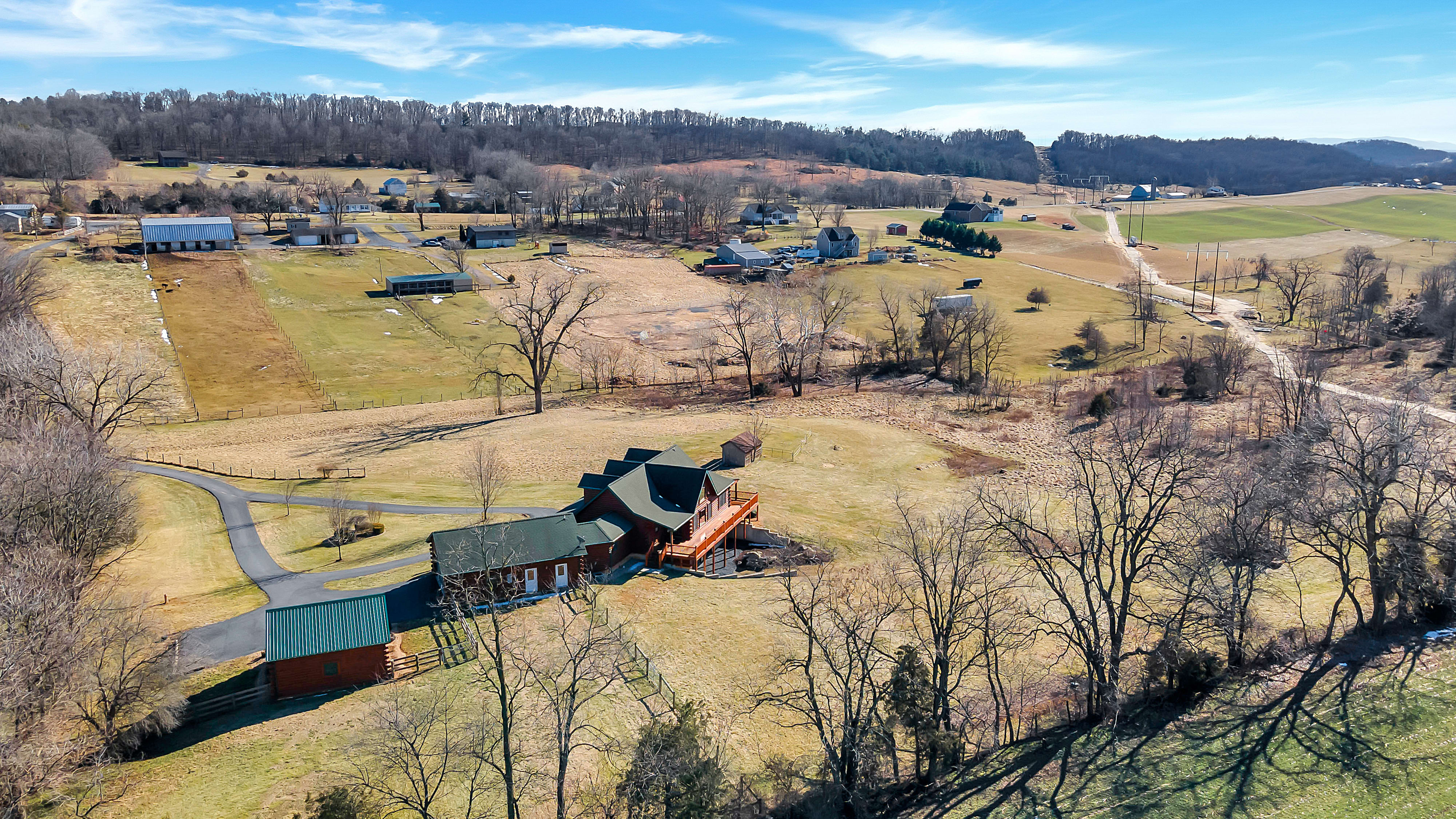
Twenty acres of gently rolling fenced pasture with a barn, good water and easy road access is one thing.
Twenty acres of mature hardwoods running straight up the side of a mountain is something else entirely.
Both may be beautiful. Both may be exactly what someone is looking for. But they aren't remotely the same property.
That distinction is important when buying a farm in Virginia, particularly here in the Shenandoah Valley and Central Virginia, where the land can change considerably within a relatively short distance.
A farm purchase requires looking beyond the house and asking a different set of questions.
How much of the acreage is actually usable?
Where does the water come from?
What condition are the fences in?
Can you get a tractor to the back field?
What happens when it rains for three days?
Can you actually keep horses there?
And what exactly are you going to do with that barn?
Let's take a walk around the property.
Start With What You Actually Want to Do
Before evaluating a farm, I think buyers should answer a surprisingly basic question:
What do you want the land to do?
A property for two horses has different requirements from a cattle operation.
A recreational property doesn't need to function like a working farm.
Someone wanting a large garden, chickens and a few goats may need considerably less land than they originally imagined.
Someone planning an equestrian property may discover that the acreage number isn't nearly as important as the amount and quality of usable pasture.
And someone buying primarily for privacy, hunting or recreation might actually prefer woods, streams and mountain ground.
There isn't a universally good farm.
There is a farm that works for what you're trying to accomplish.
Acreage Isn't the Same Thing as Usable Acreage
This is probably one of the biggest mistakes buyers can make when searching online.
The listing says 25 acres.
Great.
But what are those 25 acres?
Walk the property and you may find 10 acres of pasture, eight acres of woods, three acres of steep hillside, two acres around the house and buildings, and another couple of acres occupied by a creek, driveway or other features.
None of those things are necessarily negative.
They simply affect how the property functions.
This is why I encourage buyers to look at topography, access, soils, drainage, boundaries and potential uses rather than focusing entirely on the acreage number.
If you're evaluating undeveloped acreage or thinking about future improvements, I cover many of these fundamentals in Buying Land in Virginia: 10 Things Every Buyer Should Know Before Making an Offer.
Pasture Deserves More Than a Drive By
A green field looks like a green field from the car.
Once livestock enters the equation, there is more to consider.
What is actually growing there?
How well does it drain?
Is it overgrown?
Is there erosion?
Has it been maintained?
How easily can equipment get into it?
How is it divided?
Where will the animals get water?
A neglected pasture isn't necessarily a bad property. Pastures can be improved.
But improvement takes time, equipment and money.
If your plan involves horses or livestock, it is worth understanding what you're starting with rather than assuming every open field is ready for animals.
Fencing Can Get Expensive Quickly
Fencing is one of those improvements that tends to look simple until you start pricing posts, boards, wire, gates and labor.
Walk the fence lines.
Look for broken posts, sagging wire, rotten boards and places where trees have grown into the fence.
Then consider whether the existing fencing is even appropriate for the animals you intend to keep.
A fence that has worked perfectly well for cattle may not be what you want for horses.
And if a property has little or no fencing, don't necessarily rule it out.
Just put a realistic number beside that item before deciding what the property is worth to you.
Water Matters Twice on a Farm
With a rural home, you need water for the people.
With a farm, you may need water for everything else too.
That can mean wells, springs, streams, ponds, automatic waterers or some combination of them.
A stream running through a pasture can look idyllic, but you still need to understand its reliability, access and how you intend to manage livestock around it.
A spring can be a tremendous asset.
A pond can be useful.
A good well can simplify things considerably.
The important question is whether the property has enough dependable water in the places where you need it.
For the residential side of the equation, I have a separate guide covering Well and Septic Systems in Virginia: What Every Rural Homebuyer Should Know.
Look at the Barn Like a Building, Not a Decoration
Old barns photograph extremely well.
That doesn't mean they're structurally sound.
When evaluating a barn or other agricultural building, I want to understand the basics.
How is the foundation?
Are the posts sound?
Does the roof leak?
Is there electricity?
Is there water?
Can equipment actually get through the doors?
How is the floor constructed?
Is the building useful for what the buyer wants to do?
A beautiful old bank barn may be one of the things that makes a Virginia farm special.
It may also need a roof.
Both things can be true at the same time.
The same applies to sheds, equipment buildings, workshops, run ins and other structures.
Don't assume an outbuilding has value simply because it exists.
Its condition and usefulness matter.
Don't Forget About Access
You drove to the house, so the property has access.
That doesn't necessarily mean the whole farm does.
Can a truck and trailer reach the barn?
Can a tractor reach every field?
Can hay equipment get through the gates?
What happens after several days of rain?
If fields are separated by a creek, how do you get across it?
Are there internal farm roads?
Are portions of the property accessed through someone else's land?
These questions aren't particularly glamorous.
They become much more interesting when you have a tractor stuck in February.
Understand the Boundaries
Large rural properties aren't always as visually obvious as residential lots.
A fence may follow the property line.
Or it may not.
The tree line may be the boundary.
Or it may simply be where someone stopped clearing land 60 years ago.
County GIS maps are excellent tools for understanding the general configuration of a property, but they aren't substitutes for surveys.
This becomes particularly important when you're buying substantial acreage or when improvements, fences, roads or streams are close to boundaries.
This is one of several reasons I encourage rural buyers to look beyond the residence itself. I discuss that in more detail in The House Isn't the Only Thing You're Buying: Understanding the Land Under It.
Zoning and Land Use Matter
A farm looking like a farm doesn't necessarily answer every question about what you can do with it.
If you have a specific plan, investigate it.
That might include:
Horses
Livestock
Boarding
Agricultural businesses
Farm stores
Events
Short term rentals
Additional dwellings
Accessory dwelling units
Subdivision
Commercial activities
Rules vary by locality.
What works on a property in Rockingham County may not be treated exactly the same way in Augusta County, Page County or Albemarle County.
If a particular use is important to your decision to purchase the property, verify it before closing.
Division Rights Can Matter Even If You Never Plan to Develop
A larger parcel may have future subdivision potential.
Or it may not.
That distinction can affect value even if you intend to keep the farm intact.
A 100 acre farm with the ability to create additional parcels is potentially a different asset from a similar 100 acre farm where development rights have been restricted.
You don't have to be a developer to care about development rights.
They are part of what you're buying.
Ask About Conservation Easements
Virginia has many properties protected by conservation easements.
A conservation easement can be an excellent tool for preserving farmland, open space, historic landscapes and natural resources.
But a buyer needs to understand the restrictions attached to the particular property.
An easement may affect subdivision, additional dwellings, building locations or other future uses.
That doesn't make the property less desirable.
For the right buyer, permanently protected land may actually be part of the appeal.
The important thing is understanding the agreement rather than assuming what the word conservation means.
Pay Attention to the Neighbors
Living beside another farm is different from living beside another house.
That neighboring field may occasionally be fertilized.
There may be tractors working early in the morning.
Cattle occasionally have opinions about where they're supposed to be.
Dust happens.
Mud happens.
And depending on where you are in the Valley, poultry houses and other agricultural operations may be part of the surrounding landscape.
If you're moving from a suburban neighborhood to five or 20 acres because you want country life, make sure you actually like country life.
Agriculture isn't scenery.
It's an industry.
Look at What's Happening Beyond the Fence
The opposite issue matters too.
A farm that feels wonderfully isolated today may be near an area experiencing development pressure.
Look at neighboring parcels.
Look at zoning.
Look at road access.
Look at nearby development.
Consider whether surrounding farmland is protected or whether it could eventually become something else.
No one can guarantee what another property owner will do in the future, but understanding the surrounding land can help you make a more informed decision.
This can be especially relevant around growing portions of Rockingham County, Augusta County and Albemarle County, where rural land and residential growth sometimes meet.
The House Still Matters
After walking fields, opening gates, inspecting barns and discussing water, it's easy to almost forget there's a house involved.
Eventually, you should probably look at that too.
Many Virginia farms include older homes.
Some have been beautifully maintained.
Others have been added onto several times over the generations.
And some have a little bit of everything.
Old doesn't mean bad.
But older houses require buyers to understand what has been updated, what hasn't and what future maintenance may look like.
I've written separately about Buying an Older Home in Virginia: Charm, Character, and What Every Buyer Should Know.
A Farm Is a Collection of Systems
This is probably the easiest way to think about it.
You're not simply buying a house with a really big yard.
You're buying a collection of systems.
The house.
The land.
The water.
The septic system.
The fencing.
The roads.
The barns.
The fields.
The woods.
The drainage.
The rights associated with the property.
And sometimes the obligations associated with it.
A weakness in one area doesn't necessarily make a property a bad purchase.
It simply becomes part of the equation.
Buying a Farm in the Shenandoah Valley and Central Virginia
The Shenandoah Valley has an extraordinary variety of rural property.
Rockingham County has everything from productive agricultural land to smaller horse properties and mountain acreage.
Augusta County offers enormous geographic variety, with farms, pasture, wooded tracts and larger estates stretching across the county.
Page and Shenandoah Counties offer their own mixture of farms, mountain property and recreational land.
Travel east toward Albemarle County and the character changes again, with larger estates, vineyards, horse properties and rolling Piedmont farmland.
There isn't a single formula for deciding whether one of these properties is good.
The better question is whether it is good for what you want to do.
And that's why buying a farm requires a little more homework than counting bedrooms, bathrooms and acres.
Sometimes the prettiest farm isn't the best farm.
And sometimes the property that doesn't photograph quite as well turns out to have good land, dependable water, useful buildings, sensible access and exactly the right amount of acreage.
That's the stuff worth paying attention to.
Common Questions About Buying a Farm in Virginia
How many acres do I need for a farm in Virginia?
There isn't a single acreage requirement that defines a useful farm. The answer depends on what you intend to do with the property, the quality and configuration of the land, zoning and other property characteristics. A smaller parcel of productive, usable land may work considerably better for a particular purpose than a much larger parcel of steep or heavily wooded acreage.
How much land do I need for horses?
There isn't a universal number that works for every horse property. Pasture quality, soil, drainage, supplemental feeding, number of horses and management practices all matter. Buyers should evaluate the actual property and their intended management plan rather than relying solely on a simple acres per horse rule.
Is fencing included when a farm is sold?
Fencing attached to the land is generally treated as part of the real property, but buyers should evaluate its location, ownership, condition and suitability. A fence should also not automatically be assumed to establish the legal property boundary.
Can I subdivide a farm in Virginia?
Possibly. Subdivision potential depends on the locality, zoning, parcel history, road frontage, access, septic suitability, existing division rights, conservation restrictions and other factors. If subdivision potential is important to the purchase, it should be investigated rather than assumed.
What is a conservation easement?
A conservation easement is a legal agreement that restricts certain uses of land to protect conservation values. The restrictions vary from property to property, so buyers should review the actual recorded documents and understand how they affect future use.
Should I have a barn inspected before buying a farm?
If a barn or agricultural building is important to the value or intended use of the property, having an appropriate professional evaluate its condition can be worthwhile. A typical residential home inspection may not provide a complete assessment of large agricultural structures.
What should I investigate before buying a farm?
At minimum, consider the property's boundaries, access, topography, water, septic, soils, drainage, fencing, buildings, zoning, easements, development rights, neighboring uses and whether the usable acreage actually fits your plans.
About the Author
Isaac Hull is a REALTOR® serving Harrisonburg, Rockingham County, Staunton, Augusta County, Waynesboro, Charlottesville, Albemarle County, Page County, Luray, and communities throughout Central Virginia and the Shenandoah Valley.
With more than 10 years of experience as a licensed real estate professional, Isaac brings a well rounded perspective shaped by a background in mortgage lending, residential and commercial real estate, land sales, construction, and small scale development. He works with first time homebuyers, growing families, investors, and clients buying or selling farms, estates, recreational land, and unique properties.
Isaac believes that informed clients make better decisions. Through this blog, he shares practical advice, local market insights, and straightforward explanations of the topics that matter most, from buying and selling a home to investment strategies, land ownership, market trends, and the unique characteristics of real estate across Central Virginia.
When he's not helping clients, you'll often find him exploring the Shenandoah Valley, enjoying the outdoors with his family, or discovering another corner of Virginia that reminds him why so many people choose to call this region home.
For a complete overview of buying and selling rural property, see my guide: Land and Farms for Sale in the Shenandoah Valley: A Practical Guide
Continue Reading
The House Isn't the Only Thing You're Buying: Understanding the Land Under It
Buying Land in Virginia: 10 Things Every Buyer Should Know Before Making an Offer
Well and Septic Systems in Virginia: What Every Rural Homebuyer Should Know
Buying an Older Home in Virginia: Charm, Character, and What Every Buyer Should Know
Let's Talk Real Estate
Buying a farm is different from buying a typical home.
If you're considering a farm, estate, horse property, recreational tract or acreage in Harrisonburg, Rockingham County, Staunton, Augusta County, Waynesboro, Charlottesville, Albemarle County, Page County, Luray or elsewhere in Central Virginia and the Shenandoah Valley, I'm happy to help you understand the property and work through the questions that come with it.
You don't have to be ready to buy or sell to reach out. Sometimes a quick conversation is all it takes to point you in the right direction.
Call or Text: (540) 435-0047
Email: hullisaac@gmail.com
Website: IsaacHullRealtor.com